
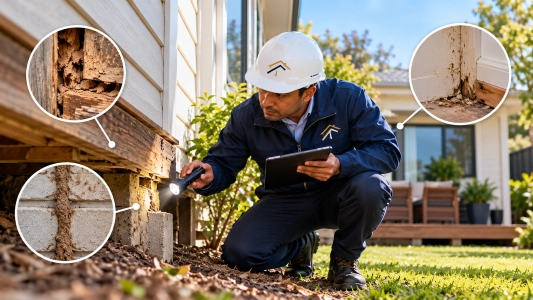

Termites can damage timber without leaving obvious signs inside a home. A property may look well maintained while concealed areas contain conditions that deserve closer attention.
For Melbourne homeowners and buyers, knowing where to look is a useful starting point.
A termite inspection checklist helps you identify possible warning signs, recognise conditions that may increase termite susceptibility and understand what a professional inspection should assess.
However, checking visible areas yourself cannot confirm that a property is termite-free. Termites may remain concealed, even when there are no obvious signs.
Termite Inspection Checklist: 8 Areas to Review
The following checklist covers common areas worth reviewing around a residential property.
| Area | What to check | Type of concern |
| Roof void | Accessible timber framing, visible deterioration and moisture | Professional inspection |
| Subfloor | Mud shelter tubes, damaged timber, dampness and poor ventilation | Professional inspection |
| External walls | Mud tubes, concealed entry points and soil against walls | Warning signs and risk conditions |
| Skirting boards and door frames | Soft timber, unusual damage and surface changes | Possible warning signs |
| Bathrooms and kitchens | Plumbing leaks and persistent dampness | Risk conditions |
| Decks, fences and pergolas | Deteriorating timber and timber-to-soil contact | Warning signs and risk conditions |
| Garden beds and landscaping | Tree stumps, timber debris, mulch and blocked inspection areas | Risk conditions |
| Termite management systems | Visible damage, maintenance records and obstructed inspection zones | System maintenance |
This checklist helps organise your observations. Roof voids, confined subfloors and other unsafe or inaccessible spaces should be left to appropriately equipped professionals.
1. Roof Void and Timber Framing
Roof spaces may contain timber framing that requires assessment for visible damage or termite activity.
A professional inspector may examine accessible areas for deterioration, suspicious timber conditions and evidence of moisture.
Homeowners should not enter roof voids without appropriate safety precautions. Electrical hazards, restricted access and unsafe surfaces can make these areas dangerous.
2. Subfloor and Crawl Spaces
Subfloors may contain timber bearers, joists and other structural components.
Where safely accessible, an inspector can look for mud shelter tubes, timber deterioration and conditions that may encourage termite activity.
From outside, homeowners can check whether ventilation openings are blocked or whether persistent dampness is visible around the building.
Restricted or unsafe subfloor areas should not be entered simply to investigate suspected termites.
3. External Walls and Building Edges
Termites may construct mud shelter tubes to move between locations while remaining protected from exposure.
Look for unusual mud-like formations around foundations, external walls and service penetrations.
Garden beds, soil or mulch built up against walls can also conceal inspection areas.
Not every crack or surface mark indicates termite activity. Suspicious signs should be professionally assessed.
4. Skirting Boards, Door Frames and Internal Timber
Internal timber can sometimes show signs of deterioration.
Watch for unusually fragile skirting boards, damaged door frames, blistered finishes or unexpected surface changes.
These symptoms can also result from moisture or other building defects.
Avoid breaking timber open to investigate. Instead, record the location and arrange an assessment.
For further examples, read BEZT’s guide to signs of termite activity in a house.
5. Bathrooms, Kitchens and Damp Areas
Moisture problems can contribute to conditions favourable to termites.
Check for leaking plumbing, persistent dampness, damaged seals and water accumulating near building materials.
Roof leaks and drainage problems should also be addressed.
Dampness alone does not confirm termites are present, but identifying and correcting moisture problems is an important maintenance measure.
6. Decks, Fences and Outdoor Timber
Outdoor timber structures deserve attention, particularly where timber touches the ground.
Review accessible decks, pergolas, fences and retaining structures for visible deterioration.
Pay attention to areas where water collects or timber remains damp.
Evidence of termite activity in an outdoor structure does not automatically establish activity inside the house, but it warrants further investigation.
7. Garden Beds, Tree Stumps and Stored Timber
Tree stumps, timber offcuts and wood piles may provide conditions suitable for termite activity.
Check whether firewood is stored against external walls and whether garden beds obstruct inspection areas.
Reducing unnecessary timber-to-soil contact and improving drainage can help address conditions that may increase susceptibility.
8. Existing Termite Management Systems
Some Melbourne properties have termite management systems installed during construction or through later treatment.
Check whether installation details and maintenance records are available.
Avoid damaging visible system components or obstructing areas that need to remain accessible for inspection.
A management system does not eliminate the need for ongoing professional inspections.
What Are the Common Warning Signs of Termites?
When using your termite inspection checklist, it helps to distinguish suspicious activity from ordinary deterioration.
Potential warning signs include:
- Mud shelter tubes on foundations, walls or timber
- Timber that appears unusually weak or damaged
- Visible termites or suspected termite workings
- Unexplained changes to timber surfaces
- Suspected activity in nearby stumps or outdoor timber
Fine timber dust or debris may indicate other timber pests and should not be treated as proof of termites.
Similarly, moisture damage, cracks and deteriorating finishes can have several causes.
A warning sign is a reason to investigate, not a confirmed diagnosis.
What Does a Professional Termite Inspection Include?
A professional timber pest inspection assesses relevant accessible areas for evidence of timber pests, observable damage and conditions that may increase susceptibility.
Australian Standard AS 4349.3:2010 provides a framework for timber pest inspections, subject to the agreed inspection scope and applicable requirements.
A professional report should explain the findings, inaccessible areas, inspection limitations and any recommended further investigation.
A non-invasive inspection cannot guarantee that every concealed infestation or damaged timber component will be identified.
When Should Melbourne Properties Be Inspected?
For property buyers, termite concerns should be investigated before making a binding purchase commitment.
This is especially important before auctions, where Victorian buyers generally don’t have a cooling-off period.
For existing homeowners, regular professional inspections help identify concerns that might otherwise go unnoticed.
Annual inspections are commonly recommended, although the appropriate frequency may depend on the property’s circumstances, termite susceptibility and professional advice.
What Should You Do If You Suspect Termites?
If you discover suspected active termites, avoid disturbing the affected area.
Do not spray household insecticide, dismantle damaged timber or break open suspected termite workings.
Instead, arrange an assessment by an appropriately qualified pest professional.
Depending on the findings, further investigation, termite treatment or building repairs may be recommended.
Understand Your Property’s Termite Risk with BEZT
A checklist is useful for identifying concerns, but it cannot replace a professional assessment.
BEZT Building & Pest Inspections provides termite and pest inspections for Melbourne homeowners and property buyers.
A professional inspection can help you understand observable evidence, relevant risk conditions, access limitations and recommended next steps.
BEZT services Melbourne and surrounding areas, including Berwick, Pakenham, Werribee, Craigieburn and Dandenong. Explore the service areas page for additional locations.
Concerned about termites? Get an instant quote from BEZT Building & Pest Inspections and arrange a professional termite assessment.
Know What to Check, and When to Seek Help
Termite activity is not always obvious.
Reviewing accessible timber, moisture conditions, landscaping and possible entry points can help homeowners recognise concerns that deserve attention.
The purpose of a termite inspection checklist is to support informed observations and timely professional assessment-not to provide false reassurance.
Understanding what has been inspected, what remains inaccessible and what needs further attention is the most useful outcome.
Frequently Asked Questions
Can I complete a termite inspection checklist myself?
You can review visible areas for warning signs and moisture-related concerns. However, a homeowner’s checklist cannot replace a professional timber pest inspection.
Does hollow-sounding timber always mean termites?
No. Timber may deteriorate because of moisture, decay or other causes. Professional assessment is needed to investigate the source.
Can termites be present without visible signs?
Yes. Termites can remain concealed within building materials or inaccessible areas, even when the property appears well maintained.
How often should Melbourne homes have termite inspections?
Annual professional inspections are commonly recommended. Your inspector may suggest a different interval based on the property and relevant conditions.
Is a termite inspection included in a building inspection?
Not necessarily. Building and timber pest inspections have different scopes. Confirm whether both assessments are included before booking.
Does a termite inspection guarantee a property is termite-free?
No. The report reflects findings within the agreed scope and access limitations at the inspection date. Concealed activity may remain undetected.