
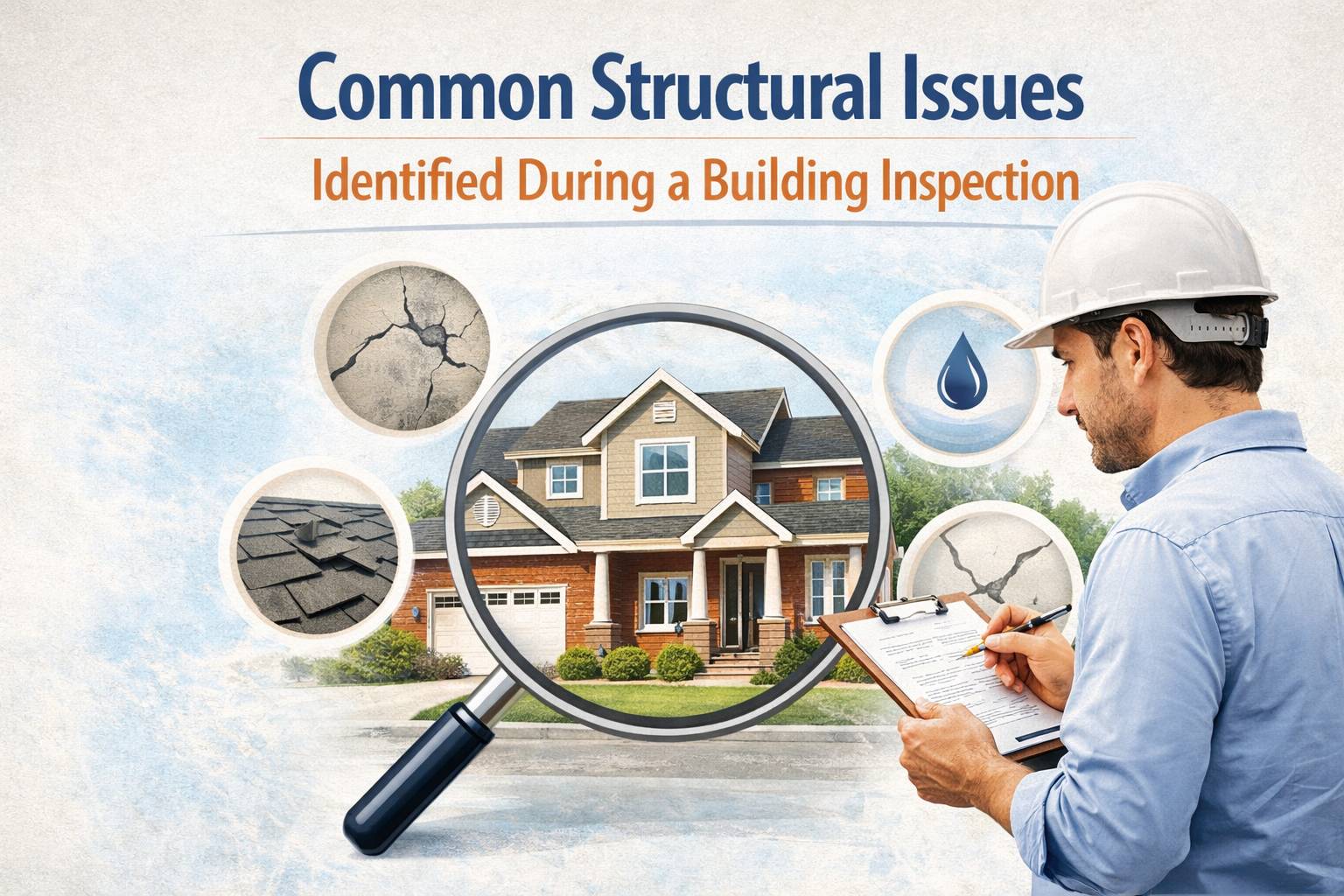
Common Structural Issues Identified During a Building Inspection

For a deeper understanding of why a professional assessment matters, read our guide on Building Inspection Is Essential Before You Buy a Property, which explains how inspections protect buyers from costly surprises.
Understanding Structural Issues in a Building Inspection
Structural issues refer to conditions that affect the stability or integrity of a building. During a building inspection, these issues are identified through a visual assessment of accessible areas of the property.The inspection focuses on observing indicators of movement, deterioration, or stress within the structure. It is important to note that inspections are non-invasive and based on visible evidence at the time of assessment.
Foundation and Footing Issues
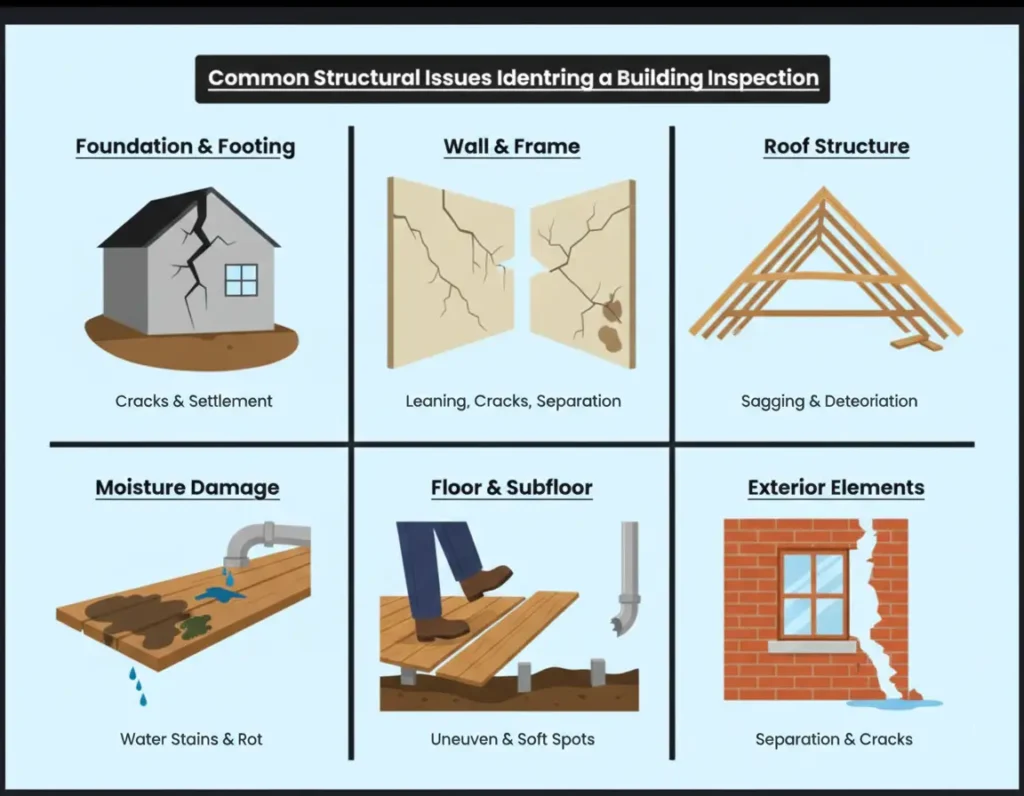
Foundations are critical to a building’s stability. During a building inspection, signs of foundation movement or settlement may be noted. Common indicators include:- Cracks near the base of walls
- Uneven or sloping floors
- Gaps between structural elements
These observations can suggest structural movement that may influence a buyer’s decision during a property inspection before purchase.
Wall and Structural Frame Concerns
Walls and structural framing provide support and shape to a building. A building inspection often includes checking for visible wall defects or alignment concerns. Inspectors may observe:- Cracks in internal or external walls
- Bowing or leaning walls
- Separation at joints or corners
Roof Structure and Support Problems
The roof structure plays a key role in protecting the building and maintaining overall stability. During a building inspection, accessible roof spaces and structural supports are visually assessed.Common observations include:
- Sagging roof lines
- Deterioration of roof framing
- Signs of structural strain in roof supports
Moisture-Related Structural Damage
Moisture can significantly affect a building’s structural components over time. A building inspection may identify signs of moisture-related damage that impact structural integrity. Indicators may include:- Water staining on structural elements
- Timber deterioration in moisture-prone areas
- Conditions that suggest prolonged exposure to moisture
Floor and Subfloor Structural Issues
Floors and subfloors contribute to a building’s overall stability. During a building inspection, accessible areas are reviewed for signs of structural concern. Common issues identified include:- Uneven or soft flooring
- Inadequate subfloor support
- Visible deterioration of structural floor components
Such findings can provide insight into the building’s overall condition during a building inspection before buying.
Why Identifying Structural Issues Before Buying Matters
For buyers in Melbourne, arranging a professional building and pest inspection Melbourne provides location-specific insight into common structural and pest-related risks found in local properties. Environmental conditions, building age, and construction practices can all influence inspection findings, making local inspection knowledge especially valuable before purchase.
Limitations of a Building Inspection
A building inspection is a visual, non-invasive assessment. Inspectors can only assess areas that are safely accessible at the time of inspection. Limitations may include:- Concealed structural elements
- Restricted access areas
- Conditions that cannot be fully assessed without invasive methods
Conclusion
Structural issues are not always obvious, but they can have a significant impact on a property’s value and suitability. A professional building inspection plays a vital role in identifying visible structural concerns before purchase.By understanding common structural issues and reviewing inspection findings carefully, buyers can make informed decisions based on the actual condition of the property—before finalising their investment.