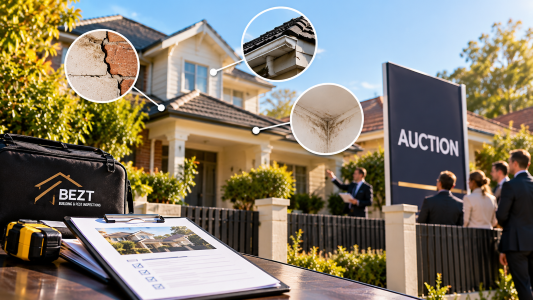


A building can look well maintained and still have areas that deserve closer attention. Fresh paint can improve presentation. A renovated bathroom can feel reassuring. A well-maintained exterior doesn’t always tell the full story.
But appearance alone does not explain the condition of the building.
That is where a professional inspection adds another perspective. A building inspector in Melbourne will assess accessible areas of the property, looking for observable defects, deterioration and other conditions that may require attention.
Understanding what an inspector actually looks at can also help you set realistic expectations. An inspection is not about predicting every future problem or seeing through walls. It is about examining what can reasonably and safely be assessed and turning those observations into useful information.
A good inspection does more than identify what looks wrong. It helps you understand what deserves attention.
What does a building inspector check?
The inspection scope may vary depending on the property, inspection type, and accessibility on the day. Generally, an inspector considers multiple parts of the building rather than focusing only on the most obvious defect.
That matters because property issues can be connected. A ceiling stain may relate to something occurring above it. A sticking door may become more relevant when cracking is also visible nearby.
Looking at the property as a whole helps put individual observations into context.
Inside the property
The interior is usually where homeowners notice problems first.
An inspector may assess accessible walls, ceilings, floors, doors, windows and other visible building elements for signs of defects, deterioration or unusual changes.
Cracking, staining, uneven surfaces, damaged finishes and doors or windows that do not operate as expected may warrant attention depending on their context. Wet areas such as bathrooms and laundries can also require closer attention because moisture-related concerns are not always immediately obvious.
The objective is not to record every cosmetic imperfection. It is to identify relevant observations that may require further attention.
Outside the building
The exterior can reveal information that is easy to miss when attention is focused on rooms and finishes.
Accessible external walls, visible cracking, deterioration, windows, doors and other building elements may form part of the assessment.
The inspector may also consider drainage, ground conditions and signs of water collecting near the building where relevant. These observations can provide useful context, particularly when moisture concerns are also visible inside the property.
Roof spaces, roofing and drainage
Roof-related problems can eventually appear inside a home as staining, moisture or deterioration.
Where safe and accessible within the inspection scope, roofing components, roof spaces, gutters and downpipes may be assessed for visible concerns.
Accessibility matters. An inspector should not enter an area that cannot be safely inspected simply to complete a checklist. A professional report should identify when access or site conditions have limited what could be observed.
Subfloor and under-house areas
Properties with accessible subfloor areas can provide another important view of the building.
Depending on access, an inspector may look for observable moisture, deterioration, ventilation concerns or other conditions affecting accessible building components below the floor.
This is one reason choosing an experienced building inspector in Melbourne matters; property owners can communicate with the inspector after the inspection. Findings from one area should be considered alongside observations elsewhere rather than treated as isolated items.
Moisture, cracking and signs of movement
These are often the findings that create the most concern for homeowners and buyers.
But a crack does not automatically indicate serious structural failure, and a moisture mark does not by itself explain where water is coming from.
An inspector considers the visible condition, location, and surrounding observations. If something cannot reasonably be determined through the inspection, further investigation by an appropriately qualified professional may be recommended.
A more focused building defect inspection can also be relevant where a property owner already has a recurring or unexplained concern.
The visible symptom is useful. Understanding its context is what makes the inspection valuable.
The inspection you need depends on the property decision
Different inspections help identify different types of property concerns. .
Situation | Inspection that may be relevant |
Considering an established property | Pre-purchase building inspection Melbourne |
Assessing building condition and timber pest concerns | Building and pest inspection Melbourne |
Preparing to bid at auction | Pre-auction building inspection Melbourne |
Building or approaching handover | New home building inspection |
Investigating a particular defect | Building defect inspection |
Concerned about termite or timber pest activity | Pest inspection Melbourne |
Recording surrounding property condition before nearby works | Dilapidation report Melbourne |
These services are not interchangeable. The right inspection depends on the property, your concerns, and what you need to know before making a decision.
Sharing your requirements when booking helps us recommend the appropriate inspection and focus on the areas that matter most.
What May Be Outside the Scope of a Building Inspection
Understanding inspection limitations is just as important as understanding what is included.
Furniture, stored belongings, finished surfaces, restricted access, unsafe areas and other site conditions can prevent parts of a property from being inspected.
A visual inspection also does not mean an inspector can see through walls, underneath every fixed floor covering or inside concealed building components.
This distinction helps answer what a building inspector checks more accurately: the inspector assesses relevant areas that are within the agreed scope and reasonably accessible at the time.
A clear building inspection report should document significant observations while also identifying relevant access or inspection limitations.
From inspecting the property to understanding the findings
The value of an inspection does not end when the inspector leaves the property.
Findings need to be communicated clearly enough for a homeowner or buyer to understand what was observed, what deserves attention, and where further investigation may be appropriate.
BEZT Building & Pest Inspections provides independent property inspections across Melbourne with a focus on thorough assessment and clear reporting. The aim is not simply to produce a long list of observations, but to make the findings easier to understand in the context of the property.
For anyone comparing a building inspector in Melbourne that property owners can rely on, it is worth looking beyond price. Consider the inspection scope, relevant experience, reporting process, and whether you can obtain clarification about the findings afterwards.
Need a clearer understanding of your property’s condition? Get an instant quote from BEZT Building & Pest Inspections and arrange the inspection that suits your property and situation.
Frequently Asked Questions
How long does a building inspection take?
The time required varies depending on the property’s size, type, condition, accessibility, and the inspection being performed. A larger or more complex property may require more time than a smaller, straightforward home.
Does a building inspector check for termites?
A standard building inspection and a timber pest inspection have different scopes. If termites or other timber pests are a concern, a dedicated pest inspection Melbourne service or combined building and pest inspection may be appropriate.
Will a building inspector tell me how much repairs will cost?
An inspection primarily identifies and reports relevant observable conditions within its scope. Repair pricing may require quotations from appropriate trades or specialists once the nature and extent of the work are understood.
Can a building inspector check behind walls?
A visual building inspection generally cannot assess concealed areas behind finished walls without appropriate access or invasive investigation. Relevant limitations should be identified in the inspection report.
Should I attend the building inspection?
This can depend on the inspector and inspection arrangements. Whether or not you attend, the important outcome is receiving clear findings and having an opportunity to understand relevant observations or recommendations.
How do I choose a building inspector in Melbourne?
When comparing a building inspector in Melbourne, homeowners can consider relevant qualifications and experience, insurance, independence, inspection scope and reporting. Reviewing a sample report can also help you understand the type of information you will receive.